
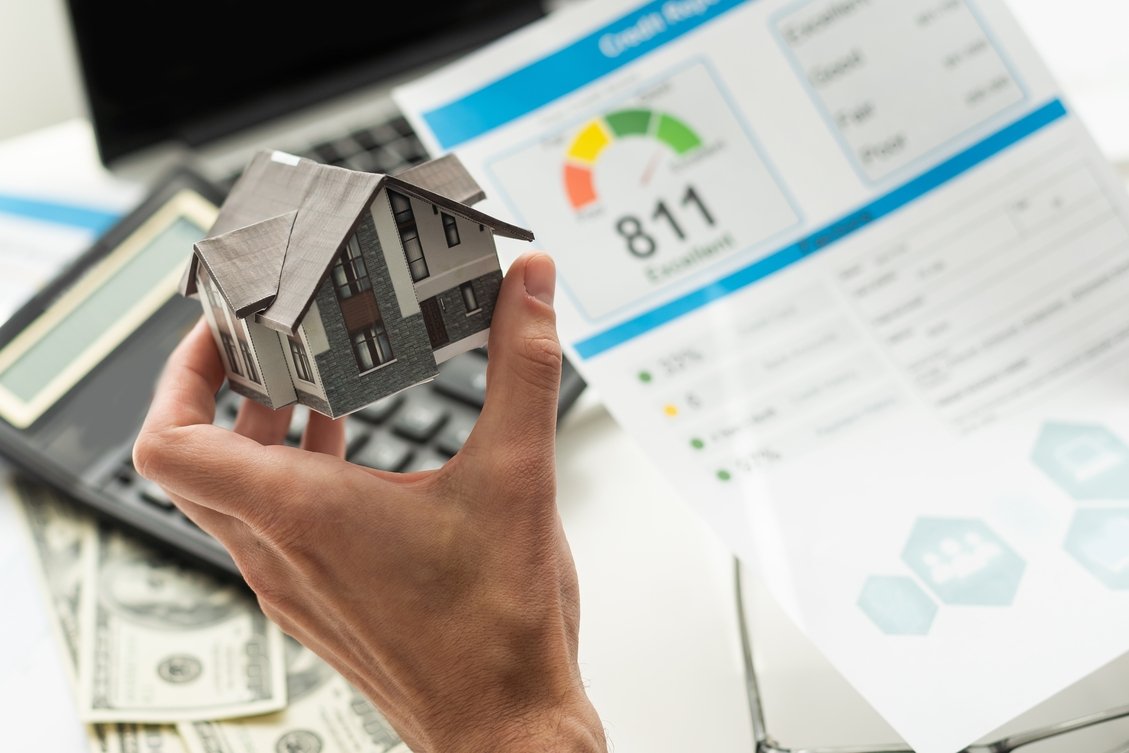
Your credit score can make or break your first home purchase. It influences your mortgage approval chances, the interest rates you qualify for, and even how much house you can afford. A higher score often means lower monthly payments and long-term savings, while a lower score may increase costs or block approval altogether. By understanding how your credit score impacts your first home purchase, you can take practical steps to improve it and secure your dream home.
For many Americans, buying a first home is one of the most exciting milestones in life. It’s not just a financial transaction—it’s a step into stability, independence, and a place to build memories. Yet behind the excitement, there’s a crucial factor that can make or break the experience: your credit score.
Your credit score isn’t just a number—it’s a reflection of your financial behavior, history, and trustworthiness in the eyes of lenders. Mortgage companies use it to decide whether they’ll lend you money, how much you’ll be approved for, and at what interest rate.
In simple terms: a high credit score saves you money, while a low score costs you money. According to Experian, the average U.S. FICO® score reached 717 in 2024—the highest on record. However, first-time homebuyers often fall below that average, which can create hurdles.
Let’s dive deep into how credit scores shape the homebuying process, what real-life examples reveal, and what you can do to improve your chances of turning homeownership dreams into reality.
A credit score is a three-digit number, usually ranging from 300 to 850, that summarizes your creditworthiness. The most widely used model is the FICO® score, though lenders may also look at VantageScore.
Here’s what makes up a FICO® score:
- Payment History (35%) – Whether you pay bills on time.
- Amounts Owed (30%) – How much debt you carry relative to your credit limits.
- Length of Credit History (15%) – How long you’ve managed credit accounts.
- Credit Mix (10%) – Variety of credit types, like credit cards, auto loans, student loans.
- New Credit (10%) – How often you’ve applied for new credit.
When it comes to homebuying, lenders view this score as a snapshot of your reliability. The higher your score, the less risky you appear.
This is one of the most searched questions among first-time buyers. The truth is, there isn’t a single answer—it depends on the loan program.
- Conventional Loans: Require a minimum of 620. The best rates are reserved for those with 740+.
- FHA Loans: Designed for first-time buyers; you can qualify with a score of 580 (with 3.5% down) or as low as 500 (with 10% down).
- VA Loans: Available to veterans and active-duty military; no official minimum, but lenders often look for 620+.
- USDA Loans: Focused on rural and suburban buyers; typically require 640+.
Key takeaway: You can buy a home with a score in the 500s, but the higher your score, the better your interest rates and loan terms. Waiting even six months to improve your score can save you thousands.
Your credit score is directly tied to the interest rate lenders offer. Even a tiny change in your score—say, moving from 679 to 680—can bump you into a new tier with better rates.
Let’s look at an example:
- A buyer with a 780 score qualifies for a 6.0% APR.
- A buyer with a 620 score may only qualify for a 7.8% APR.
Over a 30-year, $300,000 mortgage, that difference could mean paying more than $100,000 extra in interest. That’s the cost of a credit score.
Yes, but it’s more challenging. Lenders see bad credit as high risk, so they protect themselves with:
- Higher down payment requirements
- Stricter debt-to-income ratio (DTI) limits
- Higher interest rates
- More paperwork and documentation
For example, someone with a 580 score might qualify for an FHA loan with 3.5% down, but someone with a 500 score would need to put down at least 10%.
Pro tip: If you have poor credit, pairing your application with a co-borrower who has a higher score—or saving a larger down payment—can significantly improve your odds.
Let’s compare two buyers:
- Samantha – Credit score 780, applying for a $250,000 loan. She gets a 6.1% APR, resulting in a monthly payment of about $1,517.
- Marcus – Credit score 600, applying for the same loan. He gets a 7.9% APR, resulting in a monthly payment of about $1,833.
That’s a $316 monthly difference. Over 30 years, Marcus will pay about $114,000 more—all because of his credit score.
This is why first-time buyers are encouraged to check their credit long before applying for a mortgage.
Most lenders categorize scores as:
- 300–579: Poor
- 580–669: Fair
- 670–739: Good
- 740–799: Very Good
- 800–850: Exceptional
For first-time buyers, a score of 680+ is generally strong enough for favorable rates. Pushing into the 740+ range opens access to the very best terms.

Improving your score takes time, but even modest gains can save you thousands. Start preparing at least 6–12 months before applying.
Actionable steps to boost your score:
- Always pay bills on time.
- Keep credit utilization under 30% of your limit.
- Pay down high-interest debts first.
- Dispute errors on your credit report.
- Avoid opening new credit cards right before applying.
- Keep old accounts open to strengthen your credit history.
Think of credit improvement as training for homeownership—it’s about building healthy financial habits.
Indirectly, yes. Some programs let high-score buyers put as little as 3% down, while low-score buyers may need 10–20% down.
Example: On a $300,000 home:
- High score borrower: $9,000 down (3%).
- Low score borrower: $45,000 down (15%).
For many first-time buyers, that difference can determine whether homeownership feels realistic.
If you put less than 20% down, lenders usually require PMI—and its cost depends on your credit.
- With a 760+ score, PMI may cost 0.25% of the loan annually.
- With a 620 score, PMI might cost 1.5%.
On a $250,000 loan, that’s the difference between $625/year vs. $3,750/year—a massive impact on your budget.
The timeline depends on how much improvement you need.
- Small boost (30–50 points): 3–6 months
- Moderate boost (50–100 points): 6–12 months
- Major rebuild (100+ points): 1–2 years
It might feel slow, but even waiting one year to improve your score can transform your loan options and monthly payments.
Many buyers unintentionally hurt their chances by making poor credit moves right before applying. Common pitfalls include:
- Ignoring their credit report until the last minute
- Taking on new car loans or credit cards just before applying
- Maxing out cards during the mortgage process
- Co-signing loans for friends or family
- Assuming all lenders use the same criteria
Avoiding these mistakes keeps your score stable during the critical approval stage.
Q1. Can I buy a house with a 580 credit score?
Yes, FHA loans allow it, but expect higher interest rates and PMI costs.
Q2. What is the minimum credit score for a conventional mortgage?
Generally 620, though the best rates require 740+.
Q3. Does my spouse’s credit score matter if we apply together?
Yes, lenders usually consider the lower of the two scores.
Q4. Will applying for a mortgage hurt my credit?
It may drop 5–10 points temporarily, but multiple mortgage inquiries within 45 days are counted as one.
Q5. Can paying off collections improve my score quickly?
Often yes, though the impact depends on the age and type of debt.
Q6. Does student loan debt prevent me from buying a home?
Not necessarily. Lenders focus on your debt-to-income ratio, not the type of debt.
Q7. Can rent payments boost my credit?
Only if they are reported to credit bureaus, either by your landlord or via a rent-reporting service.
Q8. Can a co-signer help if my credit is bad?
Yes, but remember the co-signer is equally responsible for repayment.
Q9. Should I close old credit cards before applying?
No—closing them can reduce your available credit and hurt your score.
Q10. How do lenders treat medical debt?
As of 2023, most paid medical debt is removed from credit reports, reducing its impact.
Your credit score is more than a financial measure—it’s the gateway to your first home. For some buyers, it’s the difference between an affordable loan and overwhelming monthly payments. For others, it determines whether they qualify at all.
The good news? Credit is not fixed. With deliberate effort—paying bills on time, reducing debt, and monitoring your report—you can raise your score and secure better mortgage terms.