
Discover the 7 critical steps for building a Risk Management Plan in the U.S. Learn what it is, why it matters, the 4 types of risk management, real-life examples, and FAQs. Stay compliant with EPA and NIST standards while strengthening resilience in 2025.
A Risk Management Plan (RMP) in the U.S. is a structured approach to identifying, analyzing, mitigating, transferring, or accepting risks. It protects organizations from financial loss, reputational damage, and regulatory penalties. From EPA chemical safety rules to NIST cybersecurity frameworks, RMPs are vital for compliance and resilience. This guide explains components, strategies, and real-world examples tailored to U.S. businesses and institutions.
- What is a Risk Management Plan in the U.S.?
- Why is an RMP a Game-Changer?
- Essential Components of an RMP
- Real-World Applications in the U.S.
- What are the 4 Types of Risk Management?
- 10 Trending FAQs on Risk Management Plans
- Practical Advice & SEO-Friendly Structure
A Risk Management Plan (RMP) is a formal, documented strategy that defines how an organization identifies, evaluates, responds to, and monitors risks. These risks could be financial, operational, environmental, technological, or reputational.
In regulated contexts, RMPs are not just good practice but also a legal requirement. For example:
- EPA’s Risk Management Program (RMP Rule): Facilities handling hazardous chemicals must develop accident prevention and emergency response strategies.
- NIST Risk Management Framework (RMF): U.S. federal agencies must follow this structured model to secure IT systems.
In simpler terms, an RMP is your roadmap for uncertainty—a proactive playbook that prepares organizations for threats before they become costly crises.
Risk Management Plans are far more than compliance documents; they are strategic advantages.
An RMP shifts organizations from reactive firefighting to calm, calculated preparedness. Think of it as carrying an umbrella before a storm—not scrambling once drenched.
Stakeholders—customers, employees, regulators—gain confidence in organizations that demonstrate clear risk controls. In fact, U.S. regulators in 2024 revealed that half of large banks showed weak risk management practices, undermining public trust.
For chemical plants, the EPA’s RMP ensures transparency and readiness for accidents, enabling local communities and first responders to act swiftly if disaster strikes.
A good RMP reduces financial shocks, ensures regulatory compliance, and positions businesses for growth even in uncertain times.
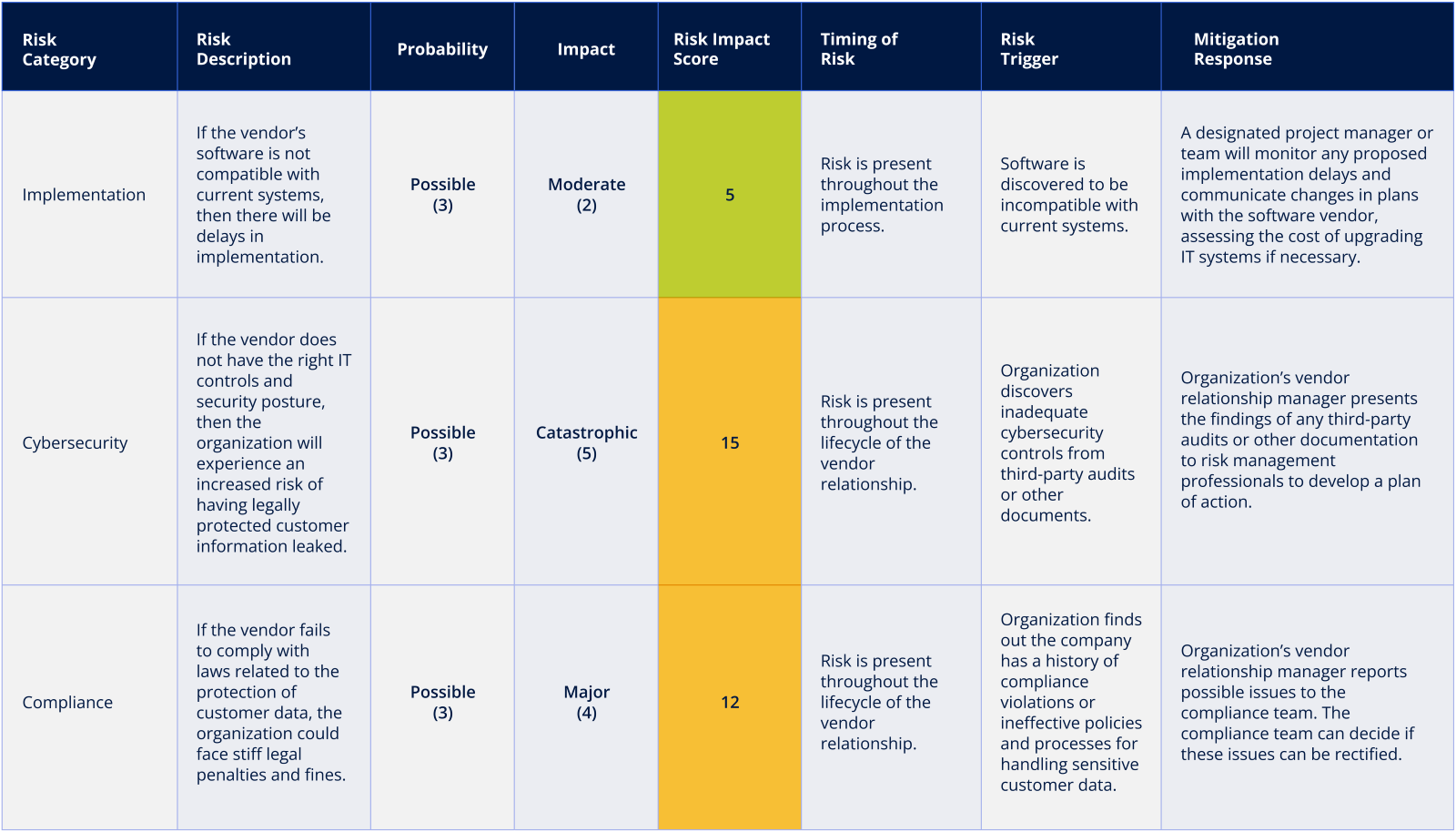
Catalog every potential risk—internal (employee errors, IT failures) and external (natural disasters, market shifts). Tools include brainstorming workshops, SWOT analysis, and industry-specific checklists.
Each risk is evaluated for:
- Likelihood (How probable is it?)
- Impact (How damaging would it be?)
Risk matrices are often used to prioritize threats.
Organizations choose one of four approaches: avoid, mitigate, transfer, or accept (detailed later in this blog).
The plan assigns responsibilities, timelines, and resources. Everyone must know who owns which risk.
Risks evolve—today’s minor issue could be tomorrow’s crisis. Continuous monitoring keeps the plan dynamic and relevant.
- Objective Setting: Define what the plan aims to protect.
- Risk Register: Maintain a living document of risks, owners, and statuses.
- Templates & Standards: Use ISO 31010 or NIST RMF for structured methodologies.
- Communication Plan: Ensure clear reporting lines during crises.
Chemical & Environmental Safety:
Under the EPA’s RMP Rule, chemical facilities must publicly disclose hazards and emergency steps. This ensures accountability and transparency.
Banking Sector:
In 2024, regulators flagged weak risk management in half of U.S. banks—showing how inadequate planning threatens entire economies.
Financial Infrastructure:
The U.S. Treasury released its Financial Services Sector RMP (2025) addressing cyber, climate, and supply chain risks.
Cybersecurity:
NIST RMF is widely adopted by private corporations to strengthen defenses against ransomware and phishing attacks.
Real Estate & Climate Risk:
In 2025, ASTM launched a property risk resilience standard (E3429-24), embedding climate considerations into real estate due diligence.
Every RMP uses one or more of the following four strategies:
Completely eliminating risky activities.
- Example: A hospital avoiding a supplier with regulatory violations.
Lowering the likelihood or impact of risks.
- Example: U.S. chemical facilities installing leak detection systems.
Passing risk to another party.
- Example: Businesses in Florida buying hurricane insurance.
Consciously keeping manageable risks.
- Example: Small retailers accepting minor shoplifting risks.
- Avoidance = Eliminate
- Reduction = Minimize
- Sharing = Transfer
- Retention = Accept
1. What does an EPA-required RMP cover?
It covers accident prevention, potential effects, and emergency response actions.
2. How does NIST RMF guide cybersecurity?
By creating a lifecycle approach—identify, protect, detect, respond, and recover.
3. Can RMPs include positive risks (opportunities)?
Yes, project managers often account for both threats and opportunities.
4. How often should RMPs be reviewed?
Continuously, with formal annual reviews.
5. What’s the difference between a Risk Register and RMP?
A register is a list of risks; the RMP is the overarching strategy.
6. How do banks benefit from RMPs?
They improve resilience and rebuild trust.
7. What’s new in climate-focused RMPs?
Standards now include future risks like floods and wildfires.
8. Why use ISO or NIST frameworks?
They offer globally recognized, structured processes.
9. Who is responsible for an RMP?
Risk ownership is spread across departments, not just leadership.
10. How do RMPs enhance resilience?
They align people, processes, and technology to withstand crises.
In the U.S., a Risk Management Plan is more than paperwork—it is a safeguard for public trust, financial security, and organizational survival. From EPA rules to NIST frameworks, risk planning ensures that uncertainty becomes an opportunity rather than a threat. Businesses that invest in strong RMPs today are the ones that thrive tomorrow.